

Proptech · Product ecosystem
Realty Odyssey
Property intelligence, made calm and human.
About the project
An AI-assisted property platform created to bring owners, managers, agents, residents, and service teams into one clear and connected operating system.
Realty Odyssey turns fragmented property work into one legible experience—helping people make decisions, resolve issues, and build better-managed communities.
- Product
- Realty Odyssey
- Status
- In active development
- Role
- Product designer & full-stack developer
- Services
- Product strategy · Research · UX/UI · Engineering
- Industry
- Real estate technology
- Platforms
- Web · Mobile
Case study framework
From the problem to the shipped product.
A transparent view of the UX thinking, interface decisions, and front-end engineering behind the work.
- 01Problem
- 02Context
- 03Discovery
- 04Pain points
- 05Flows
- 06Wireframes
- 07Exploration
- 08Final UI
- 09System
- 10Implementation
- 11Learnings
Property work was fragmented across tools, roles, and moments.
Owners, managers, agents, residents, and service teams were making decisions from different spreadsheets, chats, listings, and portals. The design challenge was to connect those workflows without turning the product into one overwhelming dashboard.
Who the product had to work for—and what the business needed it to change.
- Property owners
- Managers and agents
- Residents and guests
- Service teams
- Create one shared source of truth
- Make status and ownership visible
- Support multiple property models
- Leave room for AI-assisted workflows
Discovery focused on the decisions people were already trying to make.
- The same property data was repeatedly entered in separate tools.
- Users needed context before automation, not another opaque assistant.
- Operational actions had to remain visible from portfolio level to a single unit.
The experience had to remove three sources of friction.
Fragmented context
Financial, maintenance, listing, and resident information lived in separate places.
Unclear ownership
Teams could see an issue without knowing who was responsible or what happened next.
Role overload
One dense interface could not serve an owner, agent, resident, and technician equally well.
One product model, adapted to the role in front of it.
- 01
Enter workspace
Role-aware home and permissions
- 02
Find property
Grid, map, search, and saved views
- 03
Understand status
Finance, occupancy, and maintenance signals
- 04
Take action
Enquire, approve, pay, assign, or resolve
- 05
Track outcome
Shared activity and accountable status
The low-fidelity work concentrated on hierarchy, not visual style.
The key question was how much information each level should reveal. Early structures tested a portfolio overview, a property workspace, and an action-focused detail view before the visual system was applied.
A calm operating system for information-heavy work.
Progressive disclosure over dashboard density
Status language before decorative colour
Shared patterns across sales, rentals, stays, and operations
AI support that explains its context and next action
A connected journey from discovery to daily operations.
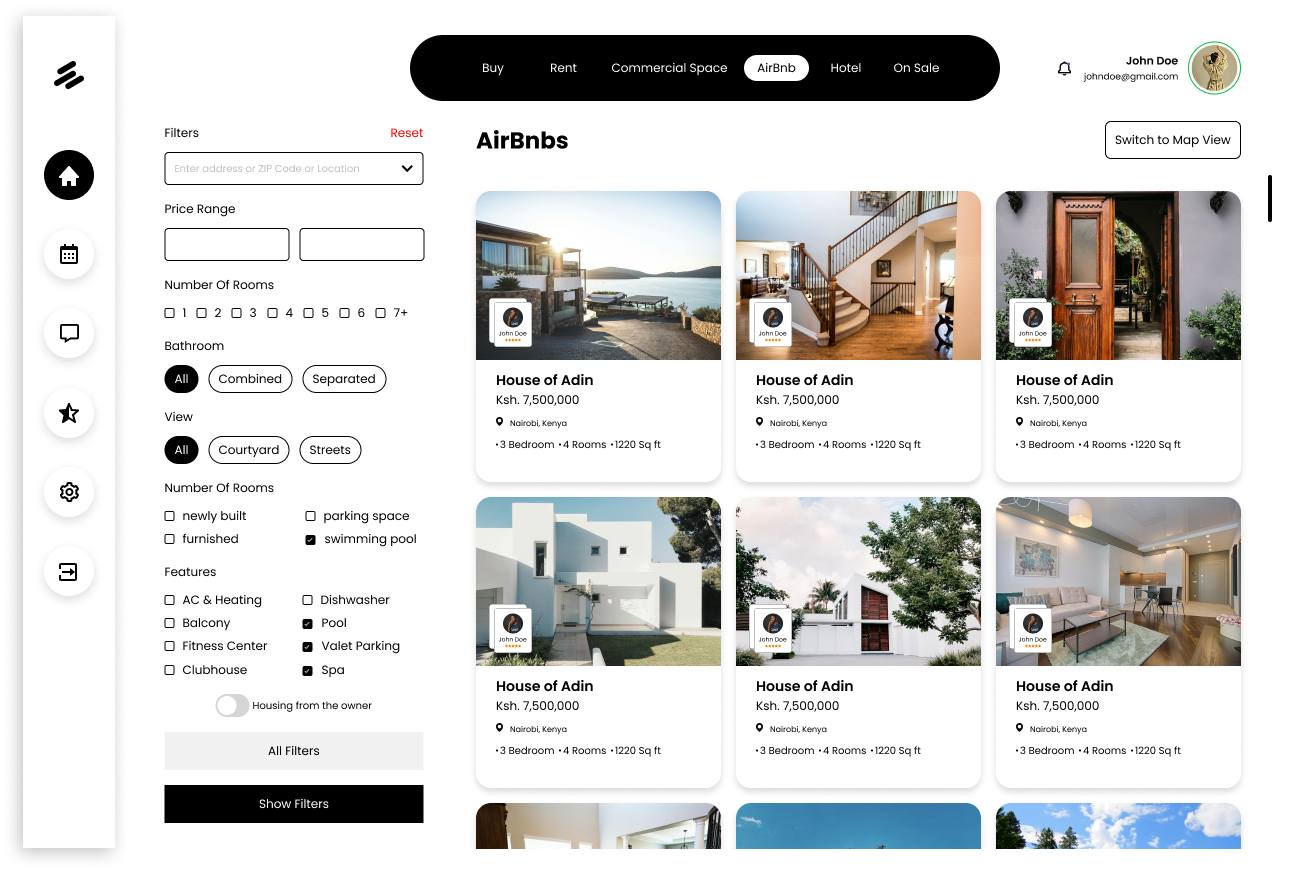
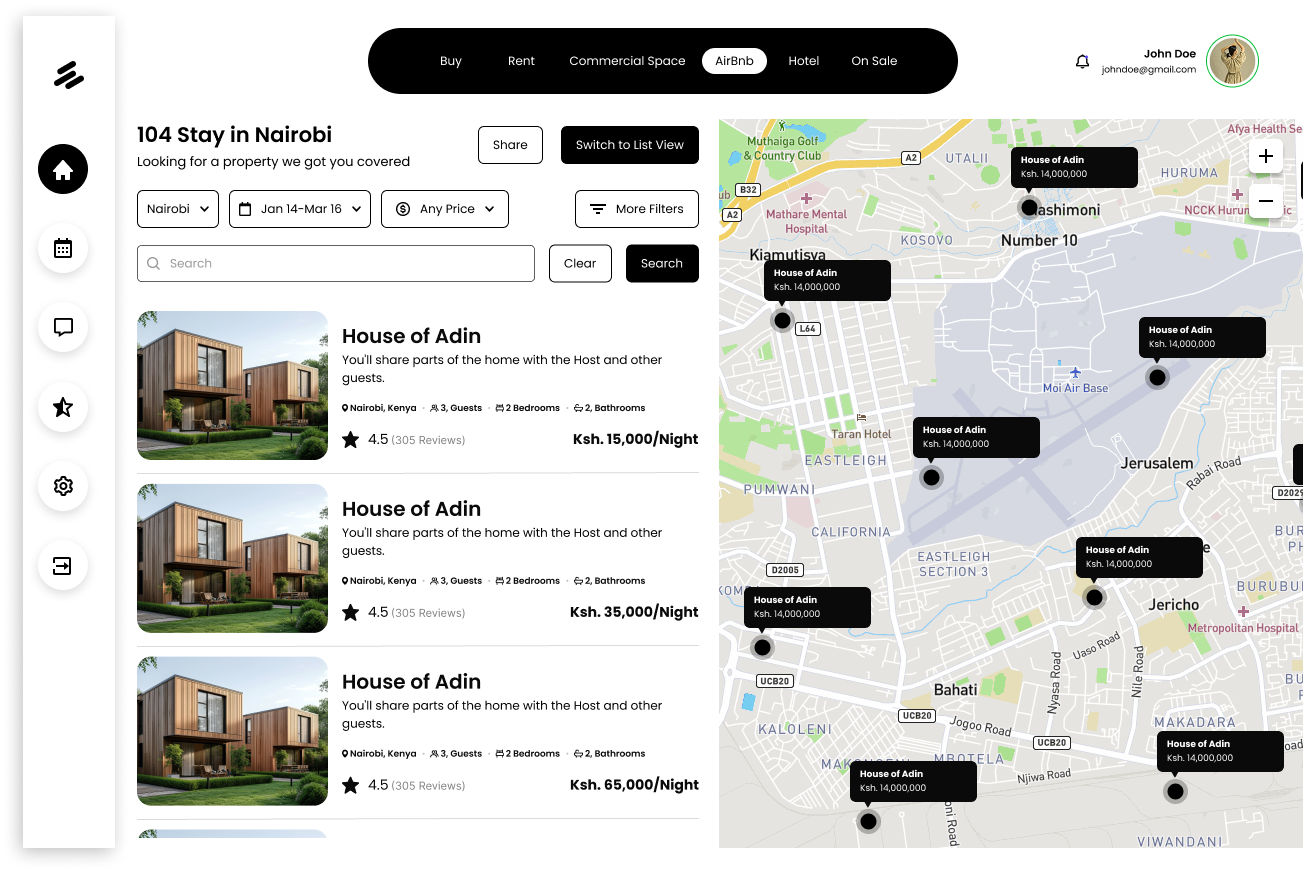
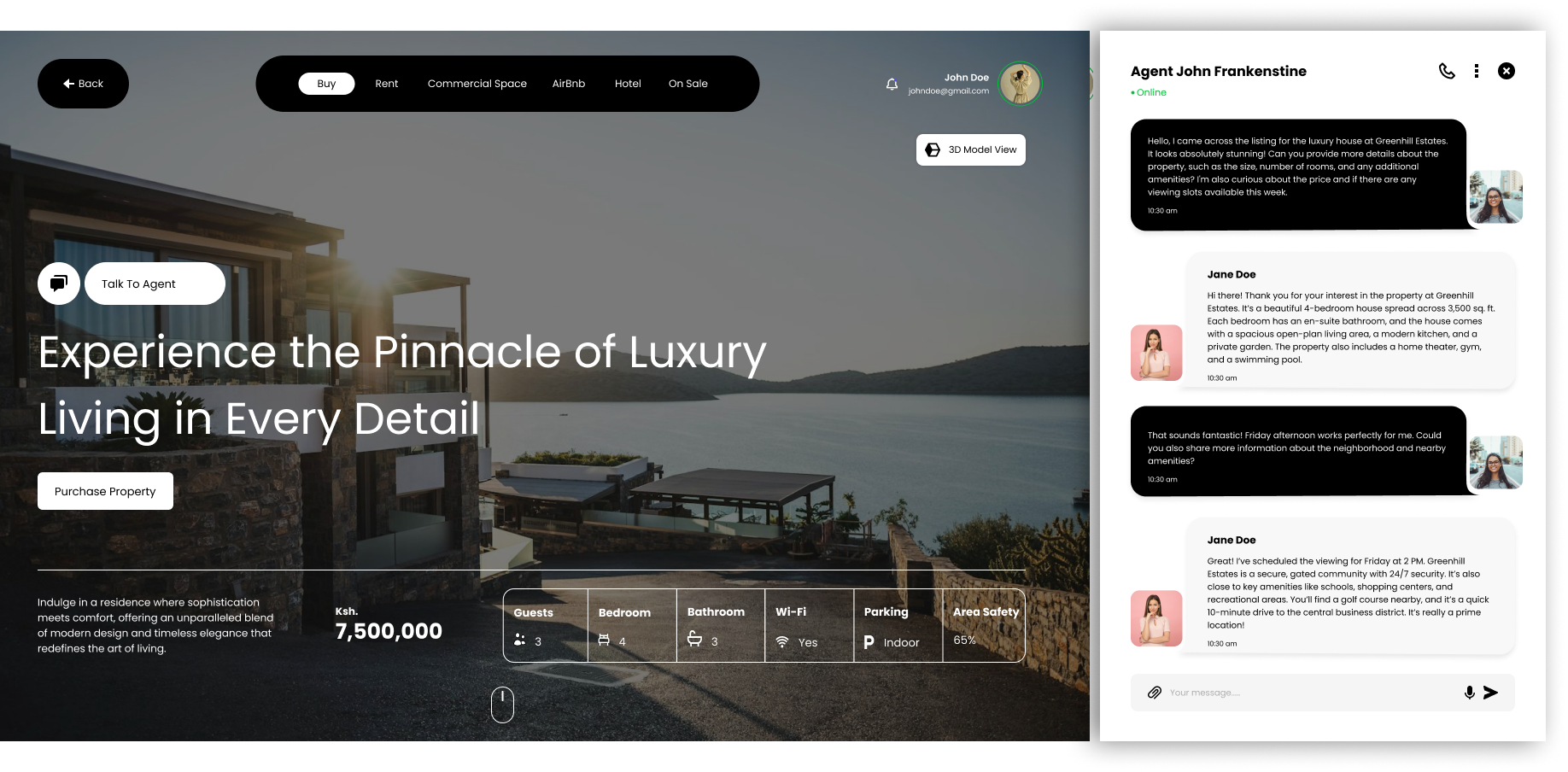
The final direction combines spatial discovery, detailed property views, and operational actions in one visual language. These product screens are from the current design and development build.
Components are organised around jobs, states, and permissions.
#244bdf#dfe5fb#101426#f7f5f0- A compact type scale keeps dense information legible.
- Semantic status tokens work across light and dark surfaces.
- Layouts reuse the same building blocks across web and mobile.
Design and engineering evolved as one product system.
The front end is built component-first so new property types and workflows can be introduced without duplicating whole screens. Product logic, permissions, responsive behaviour, loading states, and empty states were considered alongside the interface.
Model reusable domain components before page templates.
Keep filters and view state predictable across grid and map modes.
Design resilient states for partial data and long-running operations.
What the work changed—and what I would carry into the next version.
A multi-role product needs a shared information model before it needs more features.
Automation earns trust when ownership and status remain visible.
A calm interface can still carry operational depth when hierarchy is explicit.
The impact
One scalable product foundation for the full property lifecycle.
The case study documents the product direction and system now guiding active development. Its value is structural: fewer disconnected workflows, clearer accountability, and a consistent experience that can expand with the platform.
Continue exploring
Makao Homes